Key Takeaways
- Gastroscopy allows direct visualization, biopsy, and treatment, while upper GI scans rely on indirect imaging.
- Upper GI scans remain useful for assessing overall anatomy, motility, and obstruction.
- Gastroscopy is more accurate than an upper GI scan for diagnosing conditions affecting the stomach and upper digestive lining, especially early disease.
- The most accurate test depends on symptoms, clinical suspicion, and whether tissue confirmation is required.
When patients experience persistent upper abdominal symptoms, a common question arises: which is more accurate, gastroscopy or an upper GI scan?
For most conditions affecting the stomach lining and upper digestive tract, gastroscopy provides superior diagnostic accuracy because it allows direct visualization and tissue sampling, whereas upper GI scans offer structural and functional imaging without biopsy capability.
Understanding the differences between these two tests helps patients and clinicians choose the most appropriate diagnostic approach.
What Is Gastroscopy?
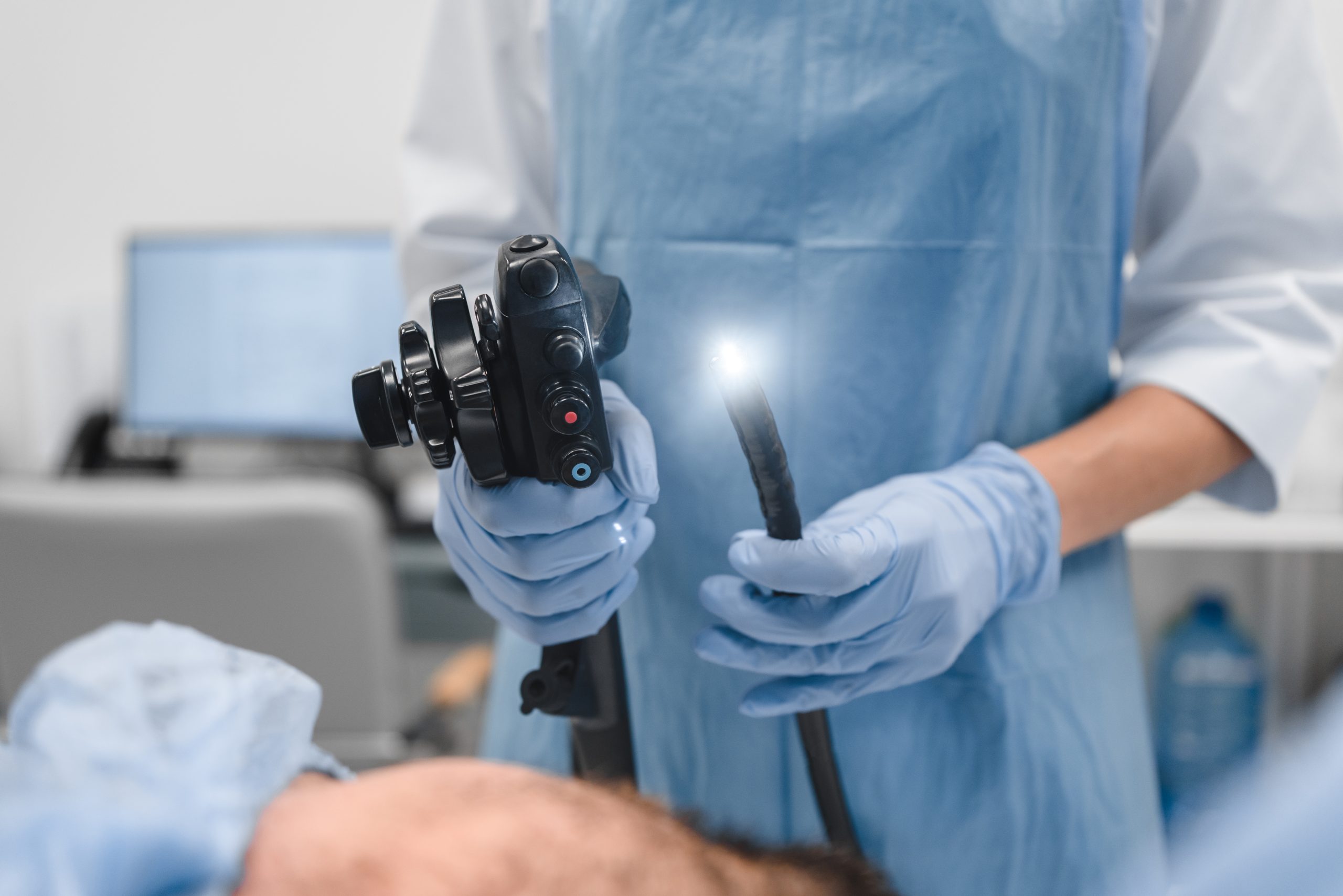
Gastroscopy is a minimally invasive procedure in which a flexible tube with a camera is passed through the mouth to examine the esophagus, stomach, and duodenum. It provides real-time, high-resolution images of the mucosal lining [1] and enables biopsy and therapeutic intervention during the same session [2].
Because gastric endoscopy allows doctors to directly see abnormalities such as inflammation, ulcers, bleeding, and early cancers, it is considered the gold standard for diagnosing many upper gastrointestinal conditions [1][3]. Biopsies can be taken during the procedure for histological confirmation.
Sedation is commonly used [4], and most procedures are completed within 15–30 minutes with same-day discharge.
What Is an Upper GI Scan?
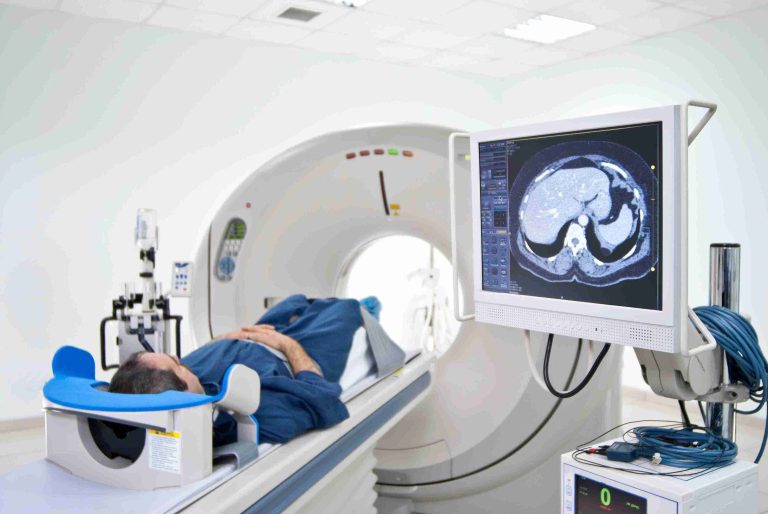
An upper GI scan, also known as a barium swallow or upper gastrointestinal series, is a radiologic test. The patient drinks a contrast solution (usually barium), and X-ray images are taken as it passes through the upper digestive tract.
This test outlines the shape and movement of the esophagus, stomach, and duodenum. It is helpful for identifying structural abnormalities such as strictures, hernias, and delayed gastric emptying [5][6].
However, an upper GI scan does not allow direct visualization of the mucosal surface and cannot obtain tissue samples.
Gastroscopy vs Upper GI Scan: Accuracy Comparison
| Feature | Gastroscopy | Upper GI Scan |
| Type of Test | Endoscopic, minimally invasive | Radiologic imaging |
| Visualization | Direct, real-time mucosal view | Indirect outline using contrast |
| Best For Diagnosing | Gastritis, ulcers, bleeding, early cancer | Structural abnormalities, motility |
| Diagnostic Accuracy | >95% for peptic ulcer disease | 70–80% for mucosal lesions |
| Biopsy Capability | Yes | No |
| Treatment During Test | Yes | No |
| Radiation Exposure | None | Yes |
| Sedation Required | Yes | No |
| Procedure Time | 15–30 minutes | 30–60 minutes |
Which Test Is More Accurate?
Overall, diagnostic gastroscopy is more accurate for diagnosing diseases of the stomach lining, including gastritis, peptic ulcers, Barrett’s esophagus, and early gastric cancer.
Large studies, including national screening programs, show gastroscopy detects gastric cancer and early lesions more effectively than radiologic imaging [5][6]. Studies also show that medical gastroscopy detects peptic ulcers with sensitivity exceeding 95%, whereas upper GI scans may miss subtle or early mucosal lesions, particularly flat ulcers and mild inflammation.
Upper GI scans, however, can be useful for:
- Detecting large anatomical abnormalities
- Assessing swallowing disorders
- Evaluating gastric emptying patterns
For these indications, they provide valuable complementary information.
Biopsy and Histological Confirmation
One of the most important advantages of gastroscopy is the ability to obtain biopsies. Tissue sampling is essential for:
- Confirming malignancy
- Diagnosing Helicobacter pylori infection
- Identifying precancerous changes
- Differentiating inflammatory conditions
Upper GI scans cannot provide histological data, which often necessitates follow-up gastroscopy if abnormalities are found.
Safety and Risk Profile
Gastroscopy tests are considered very safe, with serious complications such as perforation or significant bleeding occurring in less than 0.1% of cases. Minor side effects may include temporary throat discomfort or bloating.
Upper GI scans expose patients to ionizing radiation. While the dose is relatively low, repeated imaging increases cumulative exposure, which is a concern for younger patients or those requiring frequent testing.
When an Upper GI Scan May Be Preferred
Despite lower accuracy for mucosal disease, an upper GI scan may be preferred when:
- Endoscopy is contraindicated
- Sedation poses a risk
- There is suspicion of motility disorders
- Initial anatomical overview is required
In some cases, physicians use an upper GI scan as a screening tool before proceeding to a gastroscopy procedure.
Cost and Accessibility
Upper GI scans are generally less expensive and more widely available, particularly in smaller facilities. Gastroscopy requires specialized equipment and trained endoscopists, which can increase upfront cost.
However, because gastroscopy often provides definitive diagnosis and treatment in one session, it may reduce the need for additional testing, making it cost-effective in the long term [7].
How Doctors Decide Which Test to Use
Clinicians consider several factors:
- Nature and duration of symptoms
- Alarm features such as weight loss or bleeding
- Age and cancer risk
- Need for biopsy or immediate treatment
For patients with persistent symptoms or red flags, gastroscopy is usually recommended as the first-line investigation.
Conclusion
So, which is more accurate?
Gastroscopy is more accurate than an upper GI scan for diagnosing most stomach and upper digestive tract conditions, particularly those involving the mucosal lining and early disease.
While upper GI scans remain useful for specific indications, gastroscopy provides direct visualization, biopsy capability, and therapeutic intervention, making it the preferred diagnostic tool in modern gastroenterology. A physician-guided decision ensures the safest and most effective diagnostic pathway.
References
- American Society for Gastrointestinal Endoscopy. (2025). Role of endoscopy in the evaluation of upper gastrointestinal disease. ASGE Practice Guidelines. https://www.asge.org/home/resources/publications/guidelines
- MDPI. (2023). Enhancing the quality of upper gastrointestinal endoscopy: Current indicators and future trends. Gastroenterology Insights, 15(1), Article 1. https://doi.org/10.3390/gastroent15010001
- Lee, H.-Y., Park, E.-C., Jun, J. K., Choi, K. S., & Hahm, M.-I. (2010). Comparing upper gastrointestinal X-ray and endoscopy for gastric cancer diagnosis in Korea. World Journal of Gastroenterology, 16(2), 245–250. https://pmc.ncbi.nlm.nih.gov/articles/PMC2806564/
- Mayo Clinic. (2024). Upper endoscopy: Risks and complications. https://www.mayoclinic.org/tests-procedures/endoscopy/about/pac-20395197
- RadiologyInfo.org. (2024). Upper GI x-ray (barium swallow). https://www.radiologyinfo.org/en/info/uppergi
- National Institute of Diabetes and Digestive and Kidney Diseases. (2025). Upper GI endoscopy. https://www.niddk.nih.gov/health-information/diagnostic-tests/upper-gi-endoscopy
- World Gastroenterology Organisation. (2023). Cost-effectiveness of endoscopy. https://www.worldgastroenterology.org