Key Takeaways
- Endoscopy allows direct visualization and biopsy, making it the gold standard for many gastrointestinal conditions.
- CT scans are faster and non-invasive, ideal for emergencies and structural abnormalities.
- The best diagnostic tool depends on symptoms, urgency, and the suspected condition.
- Endoscopy provides a clearer diagnosis for conditions affecting the digestive tract lining, while CT scans are better for deeper or surrounding structures.
When doctors need to identify the cause of digestive or abdominal symptoms, the most common question patients ask is: which gives a clearer diagnosis, endoscopy or CT scan?
In most cases involving the digestive tract lining, endoscopy provides a clearer and more definitive diagnosis, while CT scans excel at detecting deeper structural problems or emergencies.
Understanding how these tests differ helps patients make informed decisions and reduces anxiety about the diagnostic process.
What Is Endoscopy?
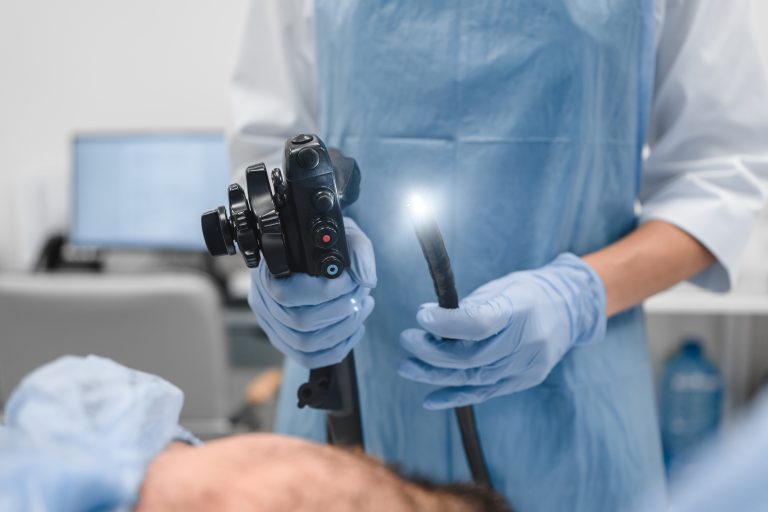
Endoscopy is a minimally invasive procedure that uses a flexible tube with a camera to directly visualize the inside of the digestive tract. Depending on symptoms, it may examine the esophagus, stomach, duodenum, or colon.
Because endoscopic procedure allows doctors to see the mucosal lining in real time, it is especially effective for identifying ulcers, inflammation, bleeding, and early-stage cancers because it allows direct visualization and biopsy during the same procedure [1].
In addition, it also enables biopsies and treatment during the same procedure, something imaging tests cannot do. Biopsy capability is essential for confirming diagnoses such as gastrointestinal cancer, inflammatory bowel disease, and infections like Helicobacter pylori [2].
This ability makes medical endoscopy one of the most valuable diagnostic tools in gastroenterology.
What Is a CT Scan?
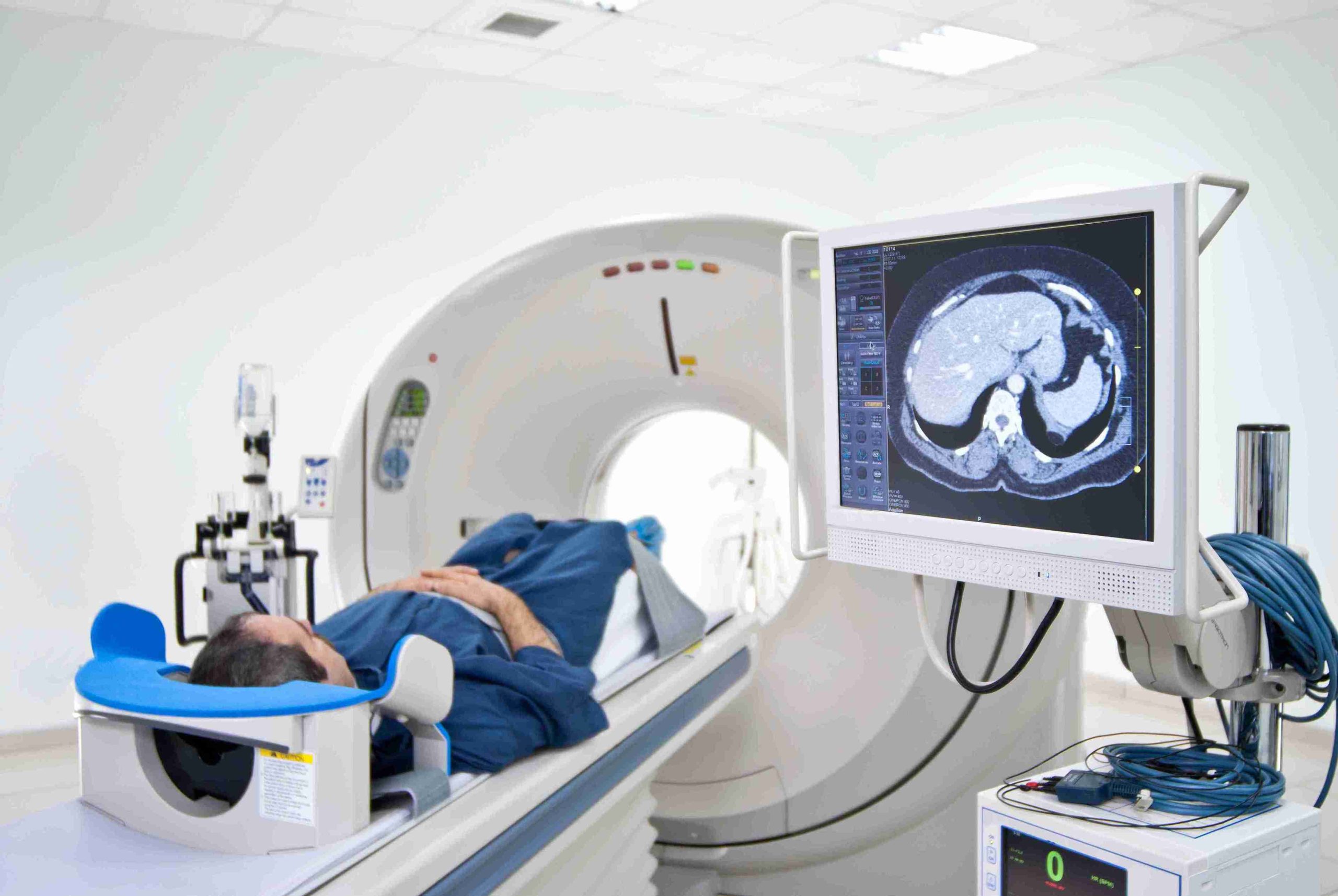
A CT scan uses X-rays and computer processing to generate detailed cross-sectional images of the body. It shows organs, blood vessels, bones, and soft tissues, offering a broader anatomical view than clinical endoscopy.
CT scans are commonly used for:
- Severe or sudden abdominal pain
- Suspected bowel obstruction or perforation [3]
- Tumor staging
- Trauma and infections
Because it is fast and non-invasive, a CT scan is often the first-line test in emergency settings [4].
Endoscopy vs CT Scan: Key Differences at a Glance
| Feature | Endoscopy | CT Scan |
| Type of Test | Minimally invasive visual examination | Non-invasive imaging test |
| What It Visualizes | Inner lining of the digestive tract | Organs, tissues, bones, blood vessels |
| Best For Diagnosing | Ulcers, gastritis, polyps, bleeding, early cancers | Tumors, obstruction, abscesses, perforation |
| Diagnostic Accuracy | >95% for peptic ulcers and mucosal disease | >90% for advanced tumors and structural disease |
| Biopsy Capability | Yes | No |
| Treatment During Test | Yes | Sometimes |
| Radiation Exposure | None | Yes |
| Sedation Required | Usually | No |
| Procedure Time | 15–45 minutes | 5–10 minutes |
| Recovery Time | Same day | Immediate |
Which Test Gives a Clearer Diagnosis?
The clarity of diagnosis depends on what doctors are looking for.
For conditions involving the digestive lining, such as gastritis, ulcers, Barrett’s esophagus, or early gastrointestinal cancer, GI endoscopy is superior. Studies show it detects peptic ulcers with over 95% accuracy, compared to CT scans which may miss early mucosal disease.
On the other hand, CT scans provide clearer information when evaluating:
- Abdominal masses
- Bowel obstruction
- Intra-abdominal bleeding
- Complications such as perforation
Studies comparing CT angiography and endoscopy for gastrointestinal bleeding show that CT may identify the presence of bleeding but is often less accurate than endoscopy in pinpointing the source, highlighting that CT cannot replace endoscopy for mucosal lesions [5].
CT may provide some information about mucosal injury in special situations (e.g., caustic ingestion), but it cannot reliably replace endoscopy for definitive diagnosis [6]. In these scenarios, CT imaging offers a broader and faster overview.
Biopsy and Treatment: A Major Advantage of Endoscopy
One of the biggest advantages of endoscopy is its therapeutic capability. During the same procedure, doctors can:
- Take tissue samples
- Remove polyps
- Stop active bleeding
- Dilate strictures
Biopsy is essential for confirming cancer, inflammatory bowel disease, and infections like Helicobacter pylori. CT scans cannot provide tissue samples and often require follow-up endoscopy for confirmation [2][5].
Safety, Risks, and Radiation Exposure
Endoscopy is generally safe, with serious complications occurring in less than 1 in 1,000 procedures. Mild side effects such as bloating or sore throat may occur temporarily.
CT scans involve ionizing radiation. A single abdominal CT scan delivers radiation equivalent to approximately 3–8 years of natural background exposure, which is why unnecessary repeat scans are discouraged.
For younger patients or those requiring repeated testing, this difference becomes clinically important.
When Doctors Prefer CT Scan Over Endoscopy
Despite the strengths of endoscopy, CT scans are preferred when:
- Symptoms are severe and sudden
- Perforation or internal bleeding is suspected
- The patient is unstable
- Disease extends beyond the digestive lining
In these cases, CT imaging offers speed [3][4] and safety without sedation.
Cost and Accessibility Considerations
CT scans are widely available and usually completed within minutes. Digestive endoscopy requires specialized equipment, trained specialists, and recovery time. However, because endoscopy often eliminates the need for additional tests by providing diagnosis and treatment in one session, it may reduce overall healthcare costs in the long term.
Making the Right Choice
Rather than competing, gastrointestinal endoscopy and CT scans often complement each other. Many patients undergo both tests during diagnosis and follow-up.
Doctors typically consider:
- Symptoms and duration
- Age and risk factors
- Urgency of the condition
- Need for biopsy or treatment
A physician-guided approach ensures the safest and most accurate diagnostic pathway.
Conclusion
So, which gives a clearer diagnosis?
Endoscopy provides the clearest diagnosis for diseases affecting the digestive tract lining, while CT scans are invaluable for detecting deeper or structural problems.
Each test serves a distinct role in modern medicine. When used appropriately, they improve diagnostic accuracy, reduce delays in treatment, and ultimately lead to better patient outcomes. Consulting a healthcare professional ensures the right test is chosen at the right time.
References
- Peixoto, A. (2015). Biopsies in gastrointestinal endoscopy: When and how. PMC. https://www.ncbi.nlm.nih.gov/pmc/articles/PMC5580003/
- Liang, J., Jiang, Y., Abboud, Y., & Gaddam, S. (2022). Role of endoscopy in management of upper gastrointestinal cancers. Diseases, 11(1), 3. https://doi.org/10.3390/diseases11010003
- Sun, B., Liu, J., Li, S., Lovell, J. F., & Zhang, Y. (2023). Imaging of gastrointestinal tract ailments. Journal of Imaging, 9(6), 115. https://doi.org/10.3390/jimaging9060115
- Romano, S., Somma, C., Sciuto, A., et al. (2022). MDCT findings in gastrointestinal perforations and the predictive value according to the site of perforation. Tomography, 8(2), 667–687. https://doi.org/10.3390/tomography8020056
- Gregoski, M. J., Rockey, D. C., et al. (2024). Diagnostic utility of CT angiography compared with endoscopy in patients with acute GI hemorrhage. Gastrointestinal Endoscopy, 99(2), 257–261.e5. https://pubmed.ncbi.nlm.nih.gov/37804874/
- Etemadi, M., et al. (2018). Diagnostic accuracy of computed tomography scan in detection of upper gastrointestinal tract injuries following caustic ingestion. Journal of Injury and Violence Research. https://pubmed.ncbi.nlm.nih.gov/28894776/