Key Takeaways
- Describing abdominal pain accurately can help your doctor narrow down possible causes and decide which examinations or tests may be appropriate.
- Be specific about the location, timing, severity, sensation, triggers, and symptoms that occur alongside the pain.
- Keeping track of when symptoms occur and what makes them better or worse can provide useful information during your appointment.
- Severe, sudden, or worsening pain, particularly when accompanied by symptoms such as vomiting, fever, fainting, or blood in the stool, may require urgent medical attention.
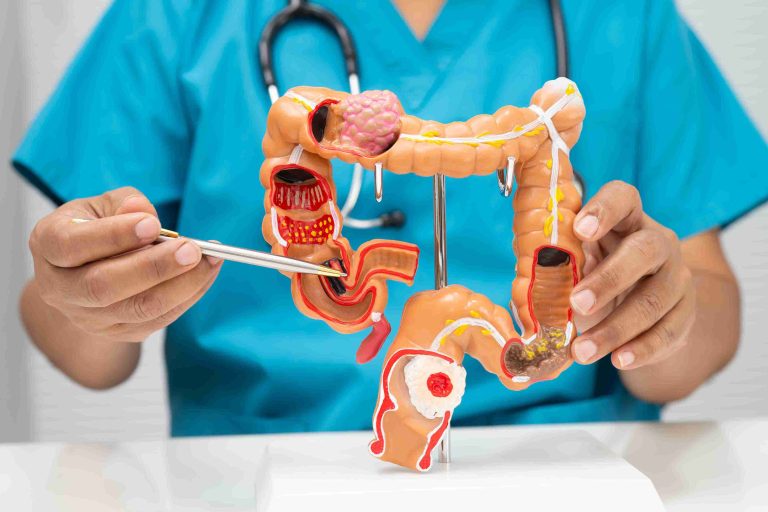
When you visit a doctor because of abdominal pain, saying that your stomach hurts may not provide enough information to identify the possible cause. The abdomen contains many organs, including the stomach, intestines, liver, gallbladder, pancreas, kidneys, and reproductive organs. Problems affecting any of these structures can produce discomfort, and symptoms can sometimes overlap [1].
The most accurate way to describe abdominal pain is to explain exactly where it occurs, what it feels like, when it started, how severe it is, what affects it, and whether you have other symptoms. These details give your doctor a clearer picture of what may be happening.
1. Point to Exactly Where It Hurts
Instead of simply saying your stomach hurts, identify the location as precisely as possible. You can describe the area as the upper, middle, or lower abdomen and indicate whether it is mainly on the left, right, or centre. For example, you might say:
- “The pain is just below my ribs on the right.”
- “It is around my belly button.”
- “The discomfort is in the lower left side.”
- “It started in the middle and moved toward the lower right.”
If the discomfort moves from one area to another, tell your doctor. The location and movement of symptoms can provide useful clues about their possible source [2].
2. Explain What the Pain Feels Like
Doctors may ask you to describe the sensation using specific words. Try to choose the description that best matches your experience rather than simply saying it hurts. You might describe it as:
- Sharp or stabbing
- Dull or aching
- Burning
- Cramping
- Pressure or fullness
- Tightness
- Throbbing
- A twisting or squeezing sensation
You can also describe whether the discomfort feels superficial, as though it is near the skin, or deeper inside the abdomen. The character of abdominal pain can sometimes help distinguish between different types of conditions, although no single description is enough to establish a diagnosis.
3. Rate How Severe It Is
Your doctor may ask you to rate your discomfort on a scale from 0 to 10, with 0 meaning no pain and 10 representing the worst pain you can imagine. Try to consider how the symptoms affect your normal activities. For example:
- 1–3: Mild discomfort but you can continue most activities
- 4–6: Moderate discomfort that interferes with some activities
- 7–10: Severe discomfort that significantly limits normal activities
It can also be useful to explain whether the intensity stays constant or comes in waves.
4. Describe When It Started
Tell your doctor when you first noticed the symptoms and whether they appeared suddenly or gradually. For example:
“It started suddenly yesterday afternoon.”
or:
“I’ve had mild discomfort for about three weeks, but it became significantly worse over the past two days.”
The duration can be particularly important when assessing stomach pain. Also mention whether you have experienced similar episodes previously.
5. Explain What Makes It Better or Worse
Think about whether certain activities, foods, positions, or medications affect your symptoms. Tell your doctor if the discomfort:
- Gets worse after eating
- Improves after passing stool or gas
- Gets worse when lying down
- Improves when sitting upright
- Becomes worse with movement
- Improves after taking an over-the-counter medication
- Comes after particular foods or drinks
Do not assume that a particular food or activity is the cause. Simply describe the pattern you have noticed.
6. Mention Other Symptoms
Other symptoms can provide important context. Depending on the situation, your doctor may ask about:
| Symptom | What to Mention |
| Nausea or vomiting | When it started and how frequently it occurs |
| Diarrhoea | Frequency, duration, and appearance of stools |
| Constipation | How long it has lasted and changes in bowel habits |
| Fever | Temperature and when it occurred |
| Bloating | Whether it occurs after meals or throughout the day |
| Blood | Whether you noticed blood in stool or vomit |
| Urinary symptoms | Pain, urgency, frequency, or blood in urine |
| Appetite changes | Whether you are eating less or feeling unusually full |
| Weight changes | Any unexplained recent weight loss or gain |
Providing these details can help your doctor determine which areas require further assessment [3].
7. Tell Your Doctor About Your Bowel Movements
Changes in bowel habits can be particularly relevant when discussing abdominal discomfort. Mention whether you have experienced diarrhoea, constipation, unusually narrow stools, changes in stool colour, excessive gas, or difficulty passing stool.
If you notice blood in your stool, tell your doctor rather than assuming it is caused by a minor problem. The appearance of the blood can also be useful information. For example, bright red blood may look different from stool that appears unusually dark or black.
8. Mention Your Medical and Medication History
Your doctor needs to know about relevant medical conditions, previous abdominal procedures, allergies, and medications or supplements you currently take.
Some medications can affect the digestive system, while previous surgery can be relevant when assessing new symptoms. Tell your doctor about prescription medications as well as over-the-counter pain relievers, vitamins, and supplements.
If you have recently travelled, experienced an infection, changed your diet, or been exposed to someone with a gastrointestinal illness, mention this as well [4].
9. Keep a Symptom Record
If your symptoms are recurring rather than severe and sudden, consider keeping a brief record before your appointment. Write down when the discomfort occurs, what you ate beforehand, its location and severity, how long it lasted, and any accompanying symptoms.
A symptom diary can help identify patterns that may otherwise be difficult to remember during a short consultation. You do not need to record every minor sensation. Focus on meaningful episodes and changes over time.
10. Know When to Seek Urgent Care
Although many causes of abdominal pain are not emergencies, certain symptoms require prompt medical assessment.
Seek urgent medical attention if you experience severe or rapidly worsening abdominal pain, significant abdominal swelling, persistent vomiting, fainting, difficulty breathing, confusion, or blood in vomit or stool. A high fever combined with significant pain may also warrant urgent evaluation [5].
Sudden severe symptoms should not be self-diagnosed based on online information. The appropriate response depends on your overall symptoms, medical history, and examination findings.
What Happens During the Appointment?
Your doctor may ask follow-up questions and perform a physical examination. Depending on your symptoms and medical history, further investigations may be considered.
These may include blood or urine tests, stool testing, ultrasound, X-rays, CT scans, endoscopy, or other investigations. Not everyone with abdominal distress needs imaging or laboratory tests. The appropriate approach depends on the suspected cause and the severity and duration of symptoms [6].
Try to answer questions as accurately as possible, even if you are unsure whether a particular detail is important. Your doctor can determine which information is clinically relevant.
Conclusion
Describing abdominal ache accurately does not require medical terminology. The most helpful approach is to explain where it occurs, what it feels like, when it began, how severe it is, whether it moves, and what makes it better or worse. You should also mention changes in bowel movements, appetite, urination, fever, vomiting, or other associated symptoms.
Clear information can help your doctor understand your symptoms and determine whether further evaluation is necessary. If the discomfort is severe, sudden, persistent, or accompanied by concerning symptoms, seek medical attention rather than waiting for it to resolve on its own.
References
- Moleski, S. M., & Nguyen, M. (2025). Evaluation of the gastrointestinal patient. Merck Manual Professional Edition. https://www.merckmanuals.com/professional/gastrointestinal-disorders/approach-to-the-gastrointestinal-patient/evaluation-of-the-gastrointestinal-patient
- Cartwright, S. L., & Knudson, M. P. (2008). Evaluation of acute abdominal pain in adults. American Family Physician, 77(7), 971–978. https://pubmed.ncbi.nlm.nih.gov/18441863/
- Moleski, S. M., & Nguyen, M. (2025). Acute abdominal pain. Merck Manual Professional Edition. https://www.merckmanuals.com/professional/gastrointestinal-disorders/acute-abdomen-and-surgical-gastroenterology/acute-abdominal-pain
- Pichetshote, N., & Pimentel, M. (2019). An approach to the patient with chronic undiagnosed abdominal pain. The American Journal of Gastroenterology, 114(5), 726–732. https://doi.org/10.14309/ajg.0000000000000130
- Macaluso, C. R., & McNamara, R. M. (2012). Evaluation and management of acute abdominal pain in the emergency department. International Journal of General Medicine, 5, 789–797. https://doi.org/10.2147/IJGM.S25936
- Yew, K. S., & George, M. K. (2023). Acute abdominal pain in adults: Evaluation and diagnosis. American Family Physician, 107(6), 605–614. https://pubmed.ncbi.nlm.nih.gov/37327158/