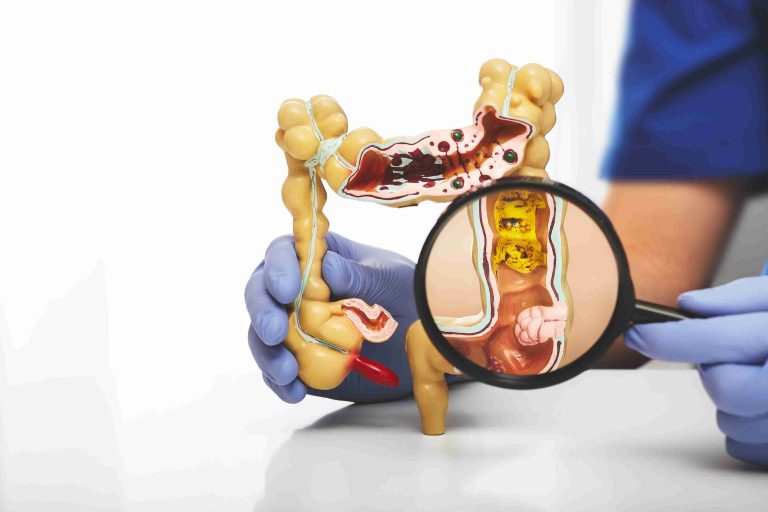
Abdominal pain is one of the most common reasons people visit doctors or emergency rooms. It can range from mild and temporary discomfort to severe and life-threatening pain. Because it involves several organs—from the stomach and intestines to the liver, pancreas, kidneys, and reproductive system—determining the exact cause can be challenging.
Doctors rely on a combination of medical history, physical examination, and diagnostic tests to identify the underlying issue. Understanding how abdominal pain is diagnosed helps patients know what to expect and why specific tests are ordered.
Understanding Abdominal Pain
Abdominal pain can arise from many sources, and its characteristics often guide initial evaluation. The location, intensity, and type of pain (sharp, dull, cramping, or burning) offer clues about which organs might be involved. For example:
- Upper right pain may relate to gallbladder or liver issues.
- Upper left pain could indicate stomach or pancreatic problems.
- Lower abdominal pain might suggest bowel, urinary, or reproductive causes.
Since the abdomen houses multiple organs, the causes of abdominal pain can include digestive conditions like gastritis or appendicitis, infections, kidney stones, gallstones, or even referred pain from the chest or back. When a patient reports persistent or severe abdominal pain, the next step is a detailed evaluation through various diagnostic tests and imaging studies.
Initial Evaluation and Physical Examination
Before ordering tests, doctors perform a comprehensive physical examination. This step helps narrow down the potential causes of abdominal pain. During the exam, the physician:
- Inspects the abdomen for swelling, discoloration, or visible abnormalities.
- Palpates (presses) different areas to detect tenderness, masses, or organ enlargement.
- Listens to bowel sounds using a stethoscope to assess intestinal activity.
- Checks for signs of dehydration, fever, or changes in blood pressure and heart rate.
A detailed medical history is equally vital. Doctors ask about symptoms such as nausea, vomiting, fever, bowel changes, or urinary difficulties. They also review diet, medications, alcohol intake, and any past surgeries—all of which can influence abdominal pain.
Laboratory Tests
Lab tests often serve as the first step after a physical exam. These tests provide essential information about organ function and can identify infection or inflammation.
1. Blood Tests
Bloodwork can reveal clues about what’s causing abdominal pain. Common tests include:
- Complete Blood Count (CBC): Detects infections or anemia.
- Liver Function Tests: Assess for hepatitis, gallbladder disease, or bile duct obstruction.
- Pancreatic Enzymes (Amylase and Lipase): Elevated levels can signal pancreatitis.
- Kidney Function Tests (BUN and Creatinine): Determine whether kidney problems are contributing.
- Electrolyte Panel: Identifies dehydration or imbalances caused by vomiting or diarrhea.
Blood tests are quick and help determine if further imaging is necessary.
2. Urinalysis
Urinalysis helps detect urinary tract infections, kidney stones, or other urinary system issues. If abdominal distress radiates to the lower back or side, this test is especially relevant.
3. Stool Tests
If the pain is accompanied by diarrhea, blood, or mucus in the stool, stool testing can identify infections, parasites, or inflammatory bowel disease.
Imaging Studies: Seeing What’s Inside
When lab results don’t pinpoint the cause of abdominal pain, imaging tests come into play. These visual examinations allow doctors to see the internal structures and identify abnormalities that physical exams can’t detect.
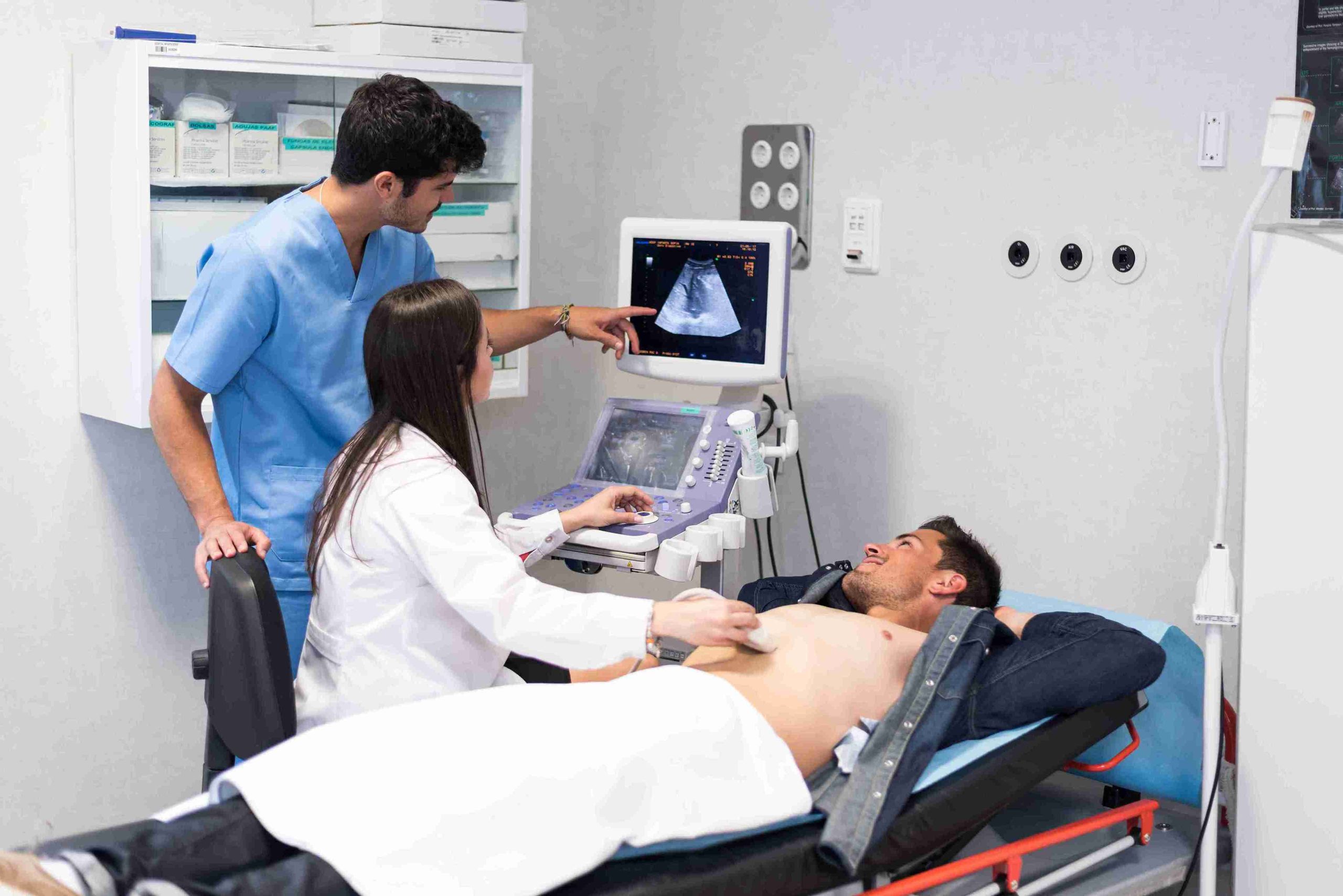
1. Ultrasound
Ultrasound is often the first imaging test for abdominal pain, especially in children and pregnant women because it’s noninvasive and radiation-free.
It uses sound waves to create images of organs and can detect:
- Gallstones or bile duct obstruction
- Liver abnormalities
- Kidney stones
- Fluid buildup in the abdomen
- Appendicitis (in certain cases)
Ultrasound is particularly effective for evaluating soft tissue and fluid-filled structures.
2. X-Ray
While less detailed than other imaging methods, abdominal X-rays can quickly detect:
- Bowel obstruction
- Perforation (by showing free air under the diaphragm)
- Swallowed foreign objects
- Constipation
It’s a fast, cost-effective first look when the cause of abdominal discomfort is unclear.
3. CT Scan (Computed Tomography)
CT scans are among the most informative tools for diagnosing abdominal pain. They use X-rays to produce detailed cross-sectional images of the abdomen, allowing doctors to view organs, blood vessels, and bones.
CT scans are commonly used to diagnose:
- Appendicitis
- Diverticulitis
- Tumors or masses
- Internal bleeding or trauma
- Pancreatitis
- Kidney stones
Contrast dye is often used to highlight structures, though it’s avoided in patients with kidney issues or allergies to the dye. CT scans are invaluable when the diagnosis is uncertain after initial tests.
4. MRI (Magnetic Resonance Imaging)
MRI uses powerful magnets and radio waves to produce high-resolution images. It’s particularly useful for evaluating soft tissue, liver lesions, or bile duct problems.
Though more expensive and time-consuming, MRI is helpful when other imaging tests are inconclusive or when radiation exposure must be minimized.
5. Endoscopy
For upper abdominal pain related to suspected stomach or esophageal issues, doctors may recommend an endoscopy. This involves inserting a thin, flexible tube with a camera through the mouth to view the esophagus, stomach, and upper intestines. Endoscopy can identify:
- Ulcers
- Gastritis
- Esophageal inflammation
- Tumors or polyps
It can also allow biopsies to be taken for further analysis. For lower abdominal pain, a colonoscopy may be performed to examine the colon.
Specialized Imaging and Diagnostic Tools
In some complex cases, further specialized imaging tests may be used to pinpoint the cause of abdominal pain.
1. HIDA Scan
A hepatobiliary iminodiacetic acid (HIDA) scan checks gallbladder function. It helps detect gallbladder inflammation or blockages that may not appear on an ultrasound.
2. Upper GI Series (Barium Swallow)
This test involves drinking a barium solution, which coats the digestive tract and makes it visible on X-rays. It can reveal ulcers, strictures, or tumors in the esophagus, stomach, and small intestine.
3. Laparoscopy
When all noninvasive tests fail to identify the cause of persistent abdominal pain, a diagnostic laparoscopy may be performed. In this minimally invasive procedure, a small camera is inserted through an incision in the abdomen to directly view internal organs. Laparoscopy can help diagnose appendicitis, endometriosis, or unexplained pelvic or abdominal pain and may allow for immediate surgical treatment if necessary.
Interpreting Results and Next Steps
After all the tests and imaging are completed, doctors analyze the results to confirm a diagnosis. Sometimes, multiple conditions may coexist—such as gallstones and gastritis—requiring a combination of treatments.
For minor conditions, abdominal pain can often be managed with medications, dietary changes, or hydration. However, severe cases such as appendicitis, bowel obstruction, or perforated ulcers often need urgent surgical intervention.
Early and accurate diagnosis is crucial because delays can lead to complications. For example, untreated appendicitis can result in rupture, while undetected ulcers may cause internal bleeding.
Precautions and Patient Preparation
Patients undergoing imaging for abdominal pain should follow preparation guidelines carefully. These may include fasting for several hours, avoiding certain medications, or informing doctors about allergies, especially to contrast dyes. During imaging, remaining still and following instructions ensures the best-quality images. Afterward, doctors discuss findings and possible treatment options based on the test results.
When to Seek Immediate Medical Attention
Not all abdominal pain requires emergency care, but certain symptoms signal serious problems. Seek immediate attention if pain is accompanied by:
- High fever
- Persistent vomiting
- Blood in stool or vomit
- Severe tenderness or swelling
- Fainting or dizziness
- Inability to pass stool or gas
Prompt medical evaluation can be life-saving in these situations.
Conclusion
Diagnosing abdominal pain involves a systematic approach—starting with history and examination, followed by targeted tests and imaging. Each tool, from blood tests to CT scans, provides valuable clues that help doctors uncover the root cause.
Because abdominal pain can stem from something as minor as indigestion or as serious as internal bleeding, understanding the diagnostic process empowers patients to seek care early and avoid complications.
Ultimately, modern imaging and testing techniques allow doctors to move beyond guesswork—offering precise diagnoses, effective treatment plans, and better outcomes for patients suffering from abdominal pain.